
A Virtuoso Musical Whirlwind from Italy
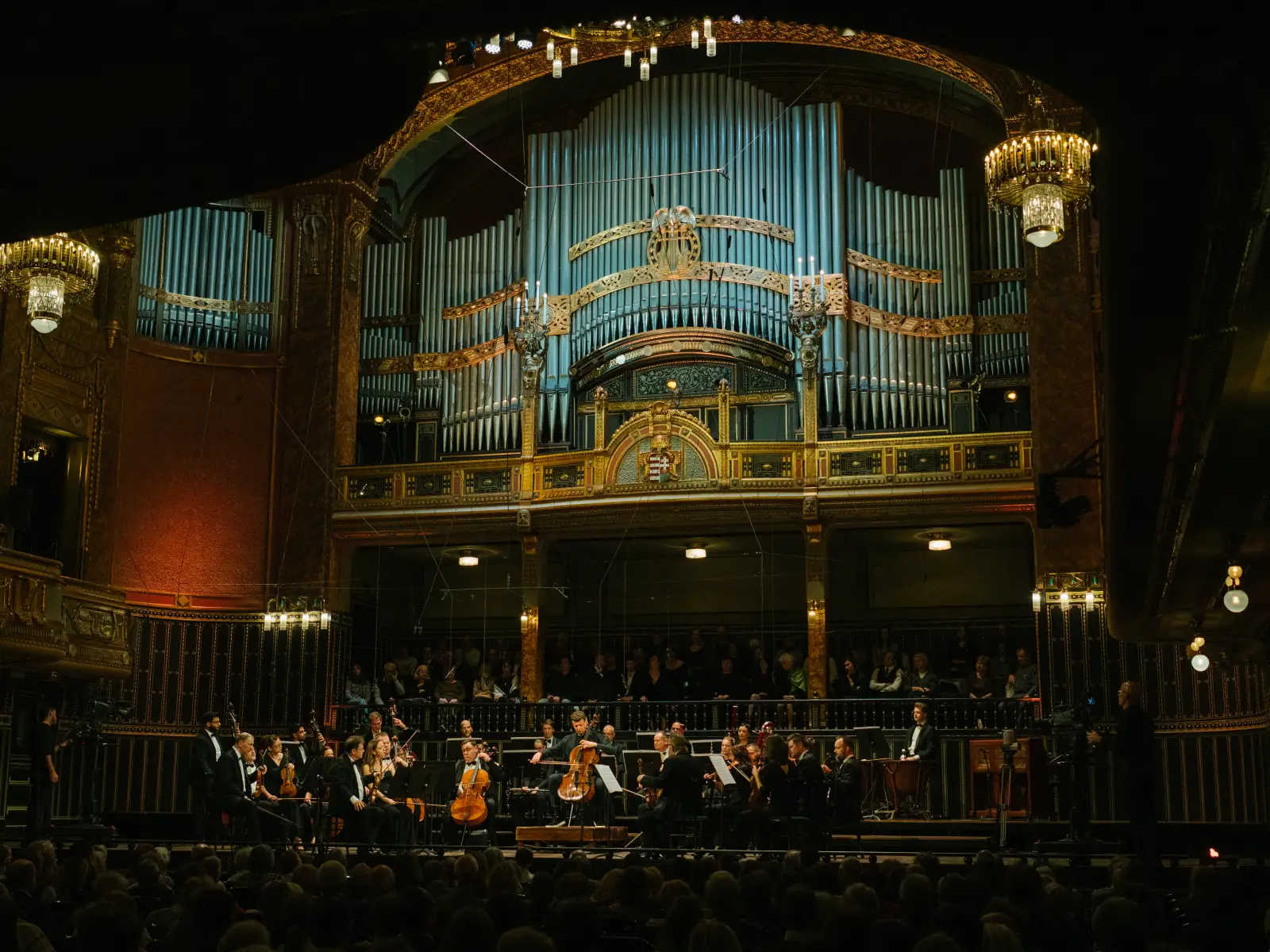
Liszt Academy Grand Hall, Thursday, October 1, 2026, 7:30 PM
For centuries, Italy stood at the heart of European instrumental virtuosity, a musical culture in which exceptional performers could rival even the most gifted composers in the esteem they commanded. This programme traces that tradition from Vivaldi to the present day. After the concertos of the “Red Priest”, the cello comes to the fore in Boccherini’s pioneering writing for the instrument, before the story is taken up by a living maestro, Giovanni Sollima. Paganini’s legendary feats of virtuosity are heard here not on the violin but on the cello, before the journey returns to Vivaldi and to an age-old melody that has travelled across Europe for centuries. And who better to lead us through this Italian landscape than the ensemble’s Artistic Director, István Várdai?
Vivaldi: Dorilla in Tempe, RV 709 and Concerto for Violin and Cello in B-flat major, RV 547 – reflective movements
Antonio Vivaldi was one of the outstanding musical minds of the Baroque, admired even by Johann Sebastian Bach. His red hair and clerical calling earned him the nickname “the Red Priest”. He wrote much of his music for the young women of a Venetian educational institution and, according to Stravinsky’s famously barbed remark, composed the same concerto four hundred times. Less often remembered is that Vivaldi was also a prolific and inventive opera composer and, for a time, sought to make his living as an impresario.
Dorilla in Tempe dates from the middle of Vivaldi’s operatic career, by which time his reputation had spread throughout Europe. The work was premiered in Venice in 1728 and, intriguingly, was also performed several times in Prague. Its plot is a love story linked to the myth of Apollo, although the opera has not survived complete.
Its overture — or sinfonia, in the terminology of the period — has nevertheless retained a place in the concert hall. The three-movement work is particularly fascinating for the way Vivaldi reuses his own music. He later incorporated the first two movements almost wholesale into his better-known opera Farnace, while the third contains another act of musical self-borrowing: passages familiar from the opening “Spring” movement of The Four Seasons.
Here, the operatic sinfonia is paired with Vivaldi’s Concerto in B-flat major for violin and cello. The work survives in an undated autograph manuscript, so its precise date of composition is unknown; fittingly, it was preserved in the same Turin library as Dorilla in Tempe. What made this double concerto unusual in its time was the prominence it accorded the cello. Alongside the violin, Vivaldi elevated an instrument still largely associated with the bass line to the status of a fully fledged solo voice.
Luigi Boccherini: Cello Concerto in B-flat major, G. 482
Luigi Boccherini, the Italian-born composer once dubbed the “Spanish Haydn”, achieved his greatest success at the court in Madrid. Music and literature ran in the family: his father was a double bassist, while his brother was a poet and librettist whose texts were set by both Haydn and Salieri. Luigi himself studied the cello with the music director of St Peter’s Basilica in Rome.
His affinity with Haydn can also be sensed in his devotion to chamber music: Boccherini composed more than a hundred string quartets and quintets. Yet it is cellists, perhaps, who have the greatest reason to cherish his legacy. Even in his chamber works, the cello is treated as an equal partner to the violins; in his twelve cello concertos, he went further still, revealing the instrument’s lyrical, tender and richly expressive possibilities.
The Cello Concerto in B-flat major is the best known of the twelve. Its opening movement begins with graceful poise before the soloist enters in broad, virtuosic lines. Boccherini demands both tonal richness and expressive flexibility, and the brilliant cadenza near the movement’s close ventures repeatedly into the instrument’s upper register. For an eighteenth-century audience accustomed to hearing the cello primarily as a bass instrument, the effect must have been striking.
The gentle melancholy of the first movement deepens into the poetic lament of the second. The finale retains something of the gravity and ceremonial character of what has gone before, yet its spirit is ultimately buoyant and good-humoured, drawing the soloist into increasingly animated motion. In Boccherini’s music — that of a composer too often relegated to the rank of a “minor master” beside Haydn and Mozart — Germanic elegance and Mediterranean temperament meet with singular ease.
Giovanni Sollima: L. B. Files – Hommage à Luigi Boccherini – Concerto for cello and chamber orchestra
Born in Palermo in 1962, Giovanni Sollima is both composer and virtuoso cellist. In this respect he belongs, in a sense, to an older musical tradition: like the great instrumentalist-composers of earlier centuries, he frequently appears on stage as an interpreter of his own works. His prolific catalogue ranges from orchestral and chamber music to opera and music for the theatre.
Composed in 2005, L. B. Files offers, in four dance-like movements, a free and fantastical portrait of Luigi Boccherini, who, in Sollima’s words, “migrated from Lucca to Spain and by the end of his life had become almost destitute”.
The opening Concerto evokes Boccherini in his role as court cellist and composer. The title of the second movement turns memory itself into a game: Igiul is simply “Luigi” read backwards, as though Sollima were looking back at his predecessor from the present through a distorting mirror.
In Fandango del Signor Bouqueriny, a bass line by Boccherini becomes the point of departure for an intensely charged, sensual dance. The movement was inspired by Casanova’s experiences in Spain in 1767: in his memoirs, he wrote with fascination of the fandango’s erotic power. The curious spelling “Bouqueriny” recalls the form of Boccherini’s name found in a contemporary French edition.
With the finale, Boccherinero, historical reality gives way entirely to imagination. Sollima pictures Boccherini returning centuries later by way of Senegal, Classical sonorities mingling with elements drawn from African music. The first recording of L. B. Files even featured the Senegalese singer and storyteller Gilbert Diop Abdourahmane.
L. B. Files is therefore more than an homage. It is a playful, fictional biography: a work that evokes Boccherini, turns his world inside out and carries his story forward. What drew Sollima to his great predecessor was precisely what also characterises his own musical language – a fearless crossing of boundaries between genres, techniques and traditions.
Niccolò Paganini: Moses Fantasy and Perpetuum mobile – versions for cello
If Boccherini and Paganini, the demonic virtuoso of the Romantic age, share a point of geographical connection, it is the Tuscan city of Lucca. It was Boccherini’s birthplace and, for Paganini, the setting of his first prestigious appointment at the ducal court, where he developed the breathtaking style that would make his name legendary.
Paganini astonished his audiences with forms of instrumental virtuosity scarcely imagined before him. He also frequently turned the popular operas of his day into vehicles for dazzling technical display.
The Moses Fantasy is based on the celebrated prayer Dal tuo stellato soglio from Rossini’s Mosè in Egitto (Moses in Egypt). Paganini’s original version was conceived for a single string: the violin’s lowest, G string. The cello transcription intriguingly reverses the idea, transferring the music to the instrument’s brilliant upper A string. A slow, singing introduction gives way to increasingly elaborate variations, yet the technical display never obscures the unmistakably operatic character of Rossini’s melody.
The Perpetuum mobile presents a very different challenge. Composed in 1835, the piece is built – true to its Latin title – on an apparently unbroken stream of lightning-fast semiquavers, as though the music were a mechanism that, once set in motion, could no longer be stopped.
The dream of perpetual motion fascinated inventors from the Middle Ages onwards, despite the physical impossibility of constructing a machine capable of moving indefinitely without an external source of energy. In the hands of a virtuoso, however, even the impossible can appear effortless. On the cello, Paganini’s writing becomes particularly spectacular: the same lightness and agility must be conjured from longer strings and a heavier bow than on the violin.
Antonio Vivaldi: La Follia, Op. 1 No. 12, RV 63
The word follia means folly or madness and originally referred to an exuberant Iberian dance. By the end of the seventeenth century, however, it had evolved into a stately variation theme in triple metre, one that countless musicians played, adapted and reimagined. La Follia is, in effect, one of European music’s earliest great travelling tunes.
Its most celebrated early setting is associated with Arcangelo Corelli. The young Vivaldi soon followed the example of his older colleague, concluding his first published collection – the Op. 1 trio sonatas – with a Follia of his own. Scored for two equal solo voices and basso continuo, the D-minor work begins with a slow and solemn theme, followed by nineteen variations ranging from weighty to playful, from measured to breathlessly fast.
At the time, La Follia was something approaching a musical sensation. Alessandro Scarlatti, Handel, Henry Purcell and Antonio Salieri all produced versions of their own. Nor did the theme disappear in later centuries: Liszt drew on it in his Spanish Rhapsody, while Beethoven alludes to it almost imperceptibly in his Fifth Symphony. Vangelis, in turn, deliberately shaped the rhythm of the principal theme of the film 1492 around this celebrated musical pattern.
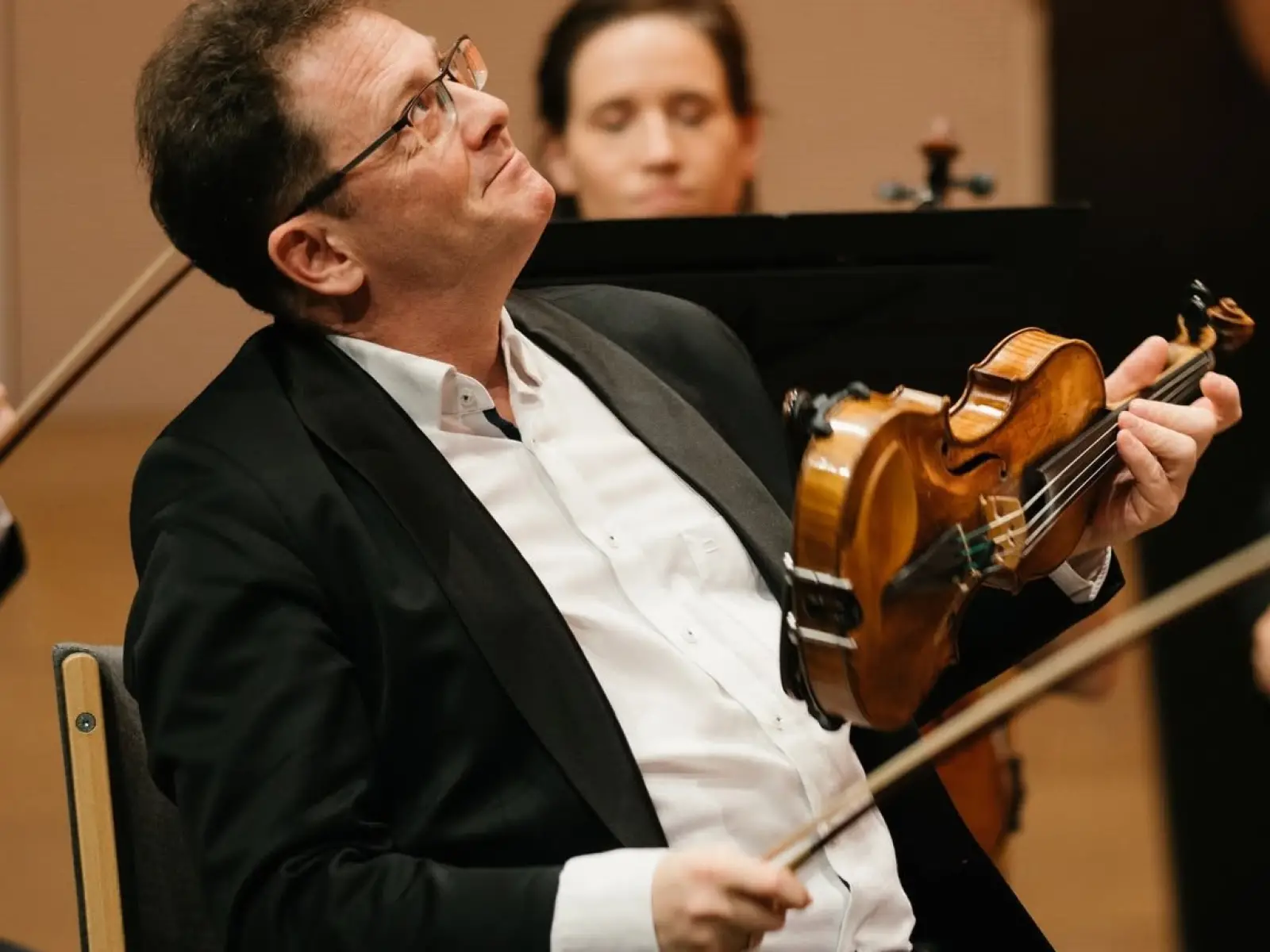
Péter Tfirst (violin)
Péter Tfirst was almost born into the world of the Franz Liszt Chamber Orchestra. His mother was a violin teacher, while his father, Zoltán Tfirst, was a member of the ensemble for five decades from 1969.
He began playing the violin at the age of four and a half, although as a child he initially imagined a future as a footballer. At the Liszt Academy in Budapest he studied with László Kóté and Dénes Kovács, and in the early years of his career gained broad experience as a freelance musician in a variety of ensembles.
János Rolla invited him to join the Franz Liszt Chamber Orchestra in 2001. He first played alongside Rolla, later became leader of the second violins, and subsequently returned to the front desk; today he is the ensemble’s concertmaster.
“I am glad that, alongside the responsibility of acting as a leader, I can still remain one of the orchestra and keep our shared success at the centre of everything we do,” he said in an interview.
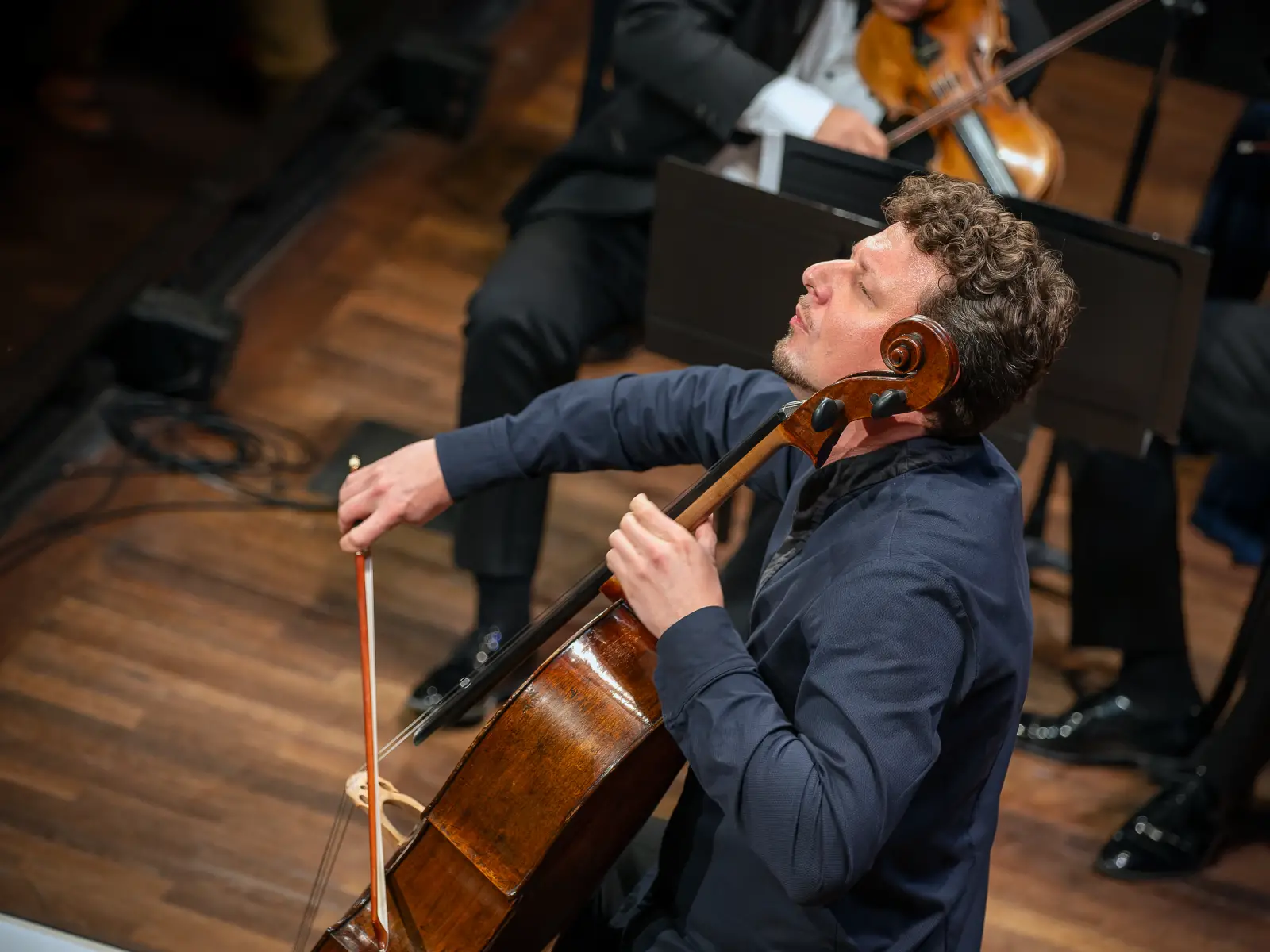
István Várdai (cello)
One of the most distinctive cellists of his generation, István Várdai began playing the instrument at the age of eight and entered the preparatory department of the Liszt Academy at eleven.
He later continued his studies in Vienna with Reinhard Latzko and at the Kronberg Academy with Frans Helmerson. Among the important milestones of his international career are major competition successes in Geneva and at the Tchaikovsky Competition in Moscow, as well as victory at the ARD International Music Competition in Munich.
As both soloist and chamber musician, he is a guest at leading concert halls throughout Europe, Asia and the Americas, collaborating with many of the foremost figures on the international music scene.
He has taught at the Kronberg Academy and in Mannheim, and currently heads the cello department at the University of Music and Performing Arts Vienna. Since 2020, he has served as Artistic Director of the Franz Liszt Chamber Orchestra, contributing to the ensemble’s work both as soloist and conductor.
Programme notes by Máté Csabai